 by

Factory Crane Access Malaysia: What Tenants Should Check
Factory Crane Access Malaysia planning is important for tenants who need to move, lift, position or service heavy machinery inside an industrial property. A factory may look suitable during viewing, but crane access depends on more than floor area. Tenants should check loading access, roller shutter height, ceiling clearance, floor loading, power supply, safety planning and business suitability before signing a tenancy.
For manufacturers, machinery users, warehouse operators and logistics companies in Selangor and Klang Valley, the right factory can reduce moving delays and support smoother daily operations.
Table of Contents
- Why Crane Access Matters for Factory Tenants
- What Is Factory Crane Access in Malaysia?
- Factory Crane Access Malaysia: 7 Key Checks
- Suitable Businesses That May Need Crane Access
- FAQ About Factory Crane Access Malaysia
Why Crane Access Matters for Factory Tenants
Crane access matters because heavy machinery movement can affect handover timing, renovation planning, installation work and the first day of operation. If the factory cannot support the lifting method, tenants may face delays, extra coordination or changes to the machinery layout.
What Is Factory Crane Access in Malaysia?
Factory crane access in Malaysia generally refers to whether a factory can physically and operationally support machinery lifting, loading or unloading. It includes entrance width, roller shutter height, yard space, internal clearance, working radius, machinery path, electrical readiness and safety control.
Tenants looking for a factory for rent or comparing factory for sale options should not judge only by built-up size. A semi-D factory, detached factory, warehouse or industrial land site may suit different lifting workflows.
Factory Crane Access Malaysia: 7 Key Checks
Below are seven practical checks tenants should review before choosing a factory that may require crane access or machinery lifting.
1. Check Loading Access from the Main Road
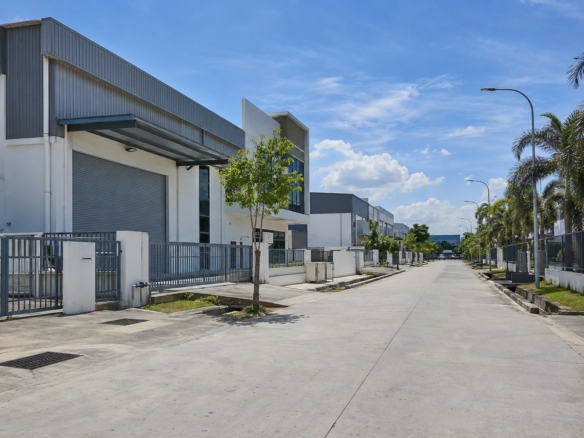
Start from the road approach. Check whether the factory entrance can support the lorry, trailer or crane vehicle needed for the move. Look at turning space, road width, guardhouse position, gate opening, parked vehicles and overhead cables.
Loading Access, Roller Shutter Height and Yard Space
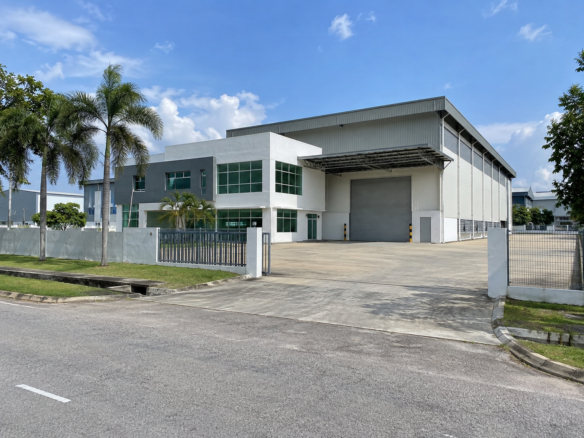
Loading access is one of the most important checks for machinery movement. Tenants should measure the roller shutter opening, loading bay width, yard depth and available working area.
2. Measure Roller Shutter Height and Door Clearance
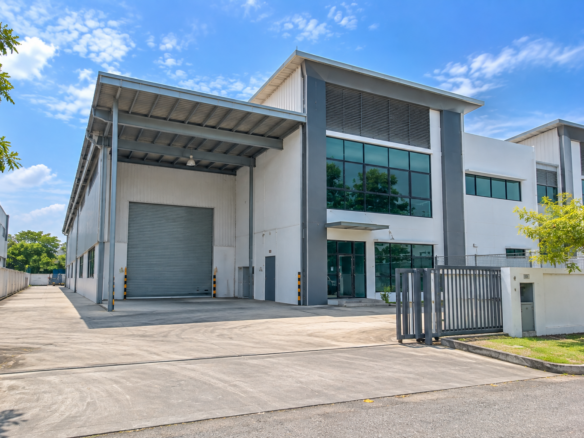
Roller shutter height can affect whether machinery can enter without dismantling. Tenants should compare machine height, packaging height, lifting clearance and transport method against the actual door opening.
Ceiling Height, Structural Clearance and Working Area
Ceiling height is not the same as working clearance. Tenants should check beams, roof trusses, lighting, sprinkler lines, cable trays, mezzanine edges and other obstructions.
3. Confirm Internal Height and Crane Working Radius
Where crane access is needed inside or near the building, the working radius and lifting path must be reviewed carefully. Tenants should mark where machinery will be unloaded, moved and installed.
Floor Loading, Machinery Weight and Lifting Method
Floor loading is a technical item that tenants should not guess. Heavy machines, forklifts, jacks, cranes and temporary lifting equipment can concentrate weight on small contact points.
4. Review Machinery Weight and Floor Condition
Before committing to a unit, prepare a machinery list showing estimated weight, machine footprint, vibration concern, anchoring needs and movement path. Check for floor cracks, uneven surfaces, repaired areas and level differences.
Power Supply, Safety and Operational Planning
Machinery lifting and installation often connect with electrical planning. Some machines need higher power supply, isolators, cabling, compressors or control panels. For general reference, tenants may refer to Suruhanjaya Tenaga and Tenaga Nasional Berhad for official energy-related information.
5. Check Power Supply Before Machinery Installation
Power supply should be checked before the machinery arrives. If wiring, switchboards or TNB-related arrangements are not ready, equipment may be positioned but cannot operate.
6. Plan Safety, Insurance and Site Control
Machinery lifting involves risk to workers, property and equipment. Tenants should coordinate with qualified crane operators, machinery movers, insurers, engineers and contractors. Insurance should also be reviewed before moving day.
7. Match Crane Access with Daily Operations
A factory may support one-time machinery installation but still be weak for daily operations. Tenants should check whether future loading, maintenance and machine replacement can be handled without major disruption.
Suitable Businesses That May Need Crane Access
Businesses that may need crane access include metal fabrication, engineering, machinery trading, printing, packaging, furniture manufacturing, moulding, automotive parts, heavy equipment servicing and certain logistics or warehousing operations.
What Tenants Should Check Before Renting a Factory
Before renting, tenants should prepare machinery dimensions, estimated weights, preferred move-in date, loading requirements, power requirement, racking or storage needs and renovation plan. This helps the agent shortlist more relevant options in Shah Alam, Klang, Port Klang and nearby Selangor industrial areas.
During viewing, tenants should take measurements and photos, check approach roads, inspect loading areas and note any obstruction. If technical uncertainty exists, arrange a second viewing with the mover, engineer, electrician or contractor.
Disclaimer: This article is for general industrial property guidance only. Tenants should verify crane access, lifting method, floor loading, ceiling height, roller shutter height, power supply, safety, insurance and compliance matters with qualified engineers, crane operators, machinery movers, contractors, insurers, consultants and relevant authorities.
How TJL Property Can Help with Factory Shortlisting
TJL Property helps industrial users compare factory, warehouse and industrial land options based on location, layout, loading access, power supply, yard space and operational suitability.
Business owners can browse factory, warehouse and industrial property listings or contact TJL Property for suitable industrial property options in Shah Alam, Klang, Port Klang and Selangor.
FAQ About Factory Crane Access Malaysia
What should tenants check about factory crane access in Malaysia?
Tenants should check loading access, roller shutter height, yard space, ceiling clearance, floor loading, machinery weight, lifting method, power supply, safety planning and insurance before renting.
Why are ceiling height and roller shutter height important?
Ceiling height and roller shutter height affect whether machinery can be unloaded, moved and positioned safely. Tenants should measure actual clearance and confirm the method with qualified movers.
Should tenants check floor loading before using a crane?
Yes. Floor loading should be verified by qualified professionals because heavy machinery and lifting equipment can place concentrated loads on the floor during movement and installation.
Can every factory support machinery lifting or crane access?
No. Factories differ by layout, access road, yard space, door height, structure, floor condition and power supply. Tenants should verify suitability before signing a tenancy.
How can I arrange a suitable factory viewing?
You can contact TJL Property to discuss your machinery size, loading needs, preferred location and operational requirements before arranging factory viewings.